After the Tackle: Reading the Choices at the Breakdown
Read the rugby breakdown by tracking ball placement, arrival timing and support shape, so each tackle makes the next contest for possession easier to follow.
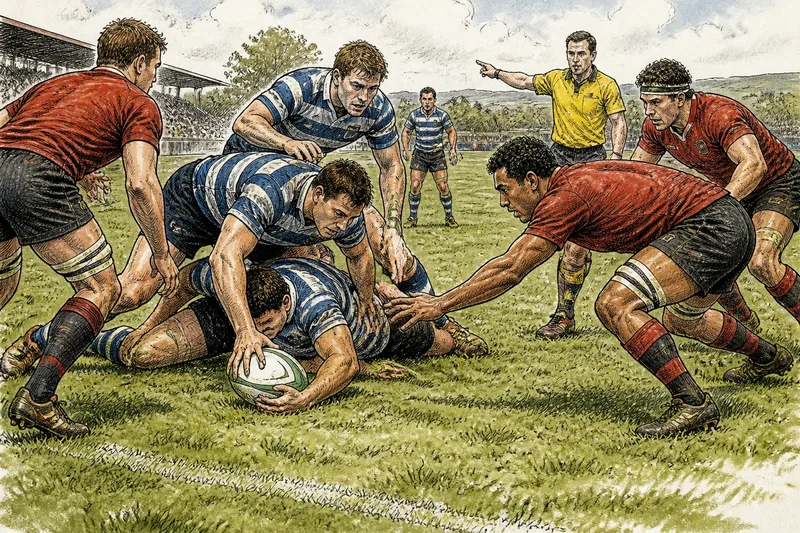
To read the rugby breakdown, start with a simple question: after the tackle, who can legally reach the ball? Watch where the tackled player releases it, how the first support players arrive, and whether a ruck forms. Those details explain why play continues, possession changes, or the referee stops the contest.
The breakdown can look like a jumble, but the sequence is more like watching a door open and close: the first legal arrivals shape who can get through next. Strength matters, yet so do balance, entry route and timing.
What changes when a tackle is complete?
When a ball carrier is tackled and brought to ground, the tackled player must release the ball. The tackler must release the tackled player and either move away or get back to their feet before playing the ball again. Other players have obligations too, including approaching and joining the contest from their own side.
A ruck forms when at least one player from each team is on their feet, in physical contact over the ball, which is on the ground. Once it forms, players may not use their hands to play the ball in the ruck; they can use their feet, or push opponents who are part of it. The precise ruling can depend on the incident and the current competition laws, so avoid treating every cluster around a tackle as a ruck.
For a viewer, ask two things: has a ruck formed, and where did each player enter? Being close to the ball does not, by itself, make it legal to reach in.
What does the first support player tell you?
First, find the ball. A tackled player who releases it clearly, often placing it back toward teammates, gives support a visible target. If the ball remains under the player or is presented toward defenders, it may be harder for either side to play cleanly; the release obligation still applies.
Next, watch the first teammate. A player who stays on their feet and binds legally to a teammate can help protect the ball and give the scrum-half time to act. A player who falls across the ball may obstruct access or leave the ball difficult to play, depending on the circumstances.
Then check the tackler. If they release and move clear, they may rejoin the contest from their own side, subject to the laws. If they keep hold of the tackled player or ball, they risk preventing a fair contest and conceding a penalty. The order of events matters more than mere proximity.
How does ball placement shape the contest?
A controlled presentation can leave the ball visible and reachable by teammates, while making defenders work around the bodies on the ground. It does not make the ball off-limits: opponents may compete if they meet the relevant requirements, including entering legally and staying on their feet.
Attackers must choose how much support to commit. One player may secure the ball while others wait to receive a pass. Or several may bind and drive opponents away, leaving fewer attackers available for the next phase. The choice depends on the immediate threat and the space elsewhere on the field.
Defenders face a similar decision. A player who arrives early, stays upright and binds legally to a teammate may help contest the ball or slow the attack. But the player must still meet the laws for entry and participation; coming in from the side, diving beyond the ball or collapsing the contest can lead to a penalty. The defense can instead leave the ball alone and retreat to organize its line.
How can you read a breakdown as it unfolds?
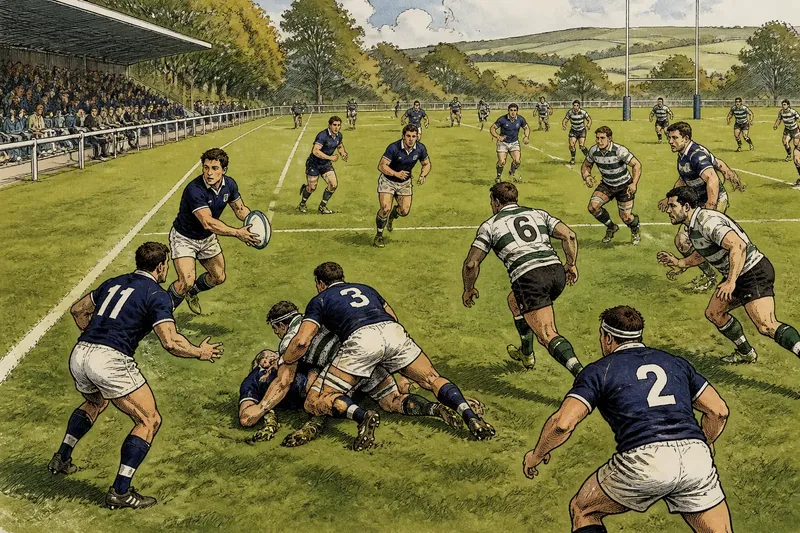
Say you are watching an invented match: a winger is tackled near the touchline and places the ball back toward a teammate. An attacking support player arrives from behind the tackle area, stays on their feet and binds over the ball; a second teammate waits behind. A defender then approaches from the side. If the referee judges that entry illegal, the defender may be penalized; if the defender instead enters legally and remains on their feet, the attack must protect the ball or risk losing it. The observable outcome depends on the players’ actions and the referee’s decision, not on the starting positions alone.
Use this sequence to follow the contest. For each check, the result points to a next question rather than a guaranteed outcome:
- Ball placement: If the ball is visible and released, watch who reaches it next; if it is trapped, look for a release or a referee stoppage.
- Tackler release: If the tackler has let go and moved clear, check whether they re-enter from their side; if they still hold the player or ball, watch for a penalty decision.
- First support: If the player stays on their feet and binds legally, watch whether the ball is protected; if they fall across it, look for obstructed access or a whistle.
- Entry route: If a player comes from behind their side of the contest, check whether they also stay on their feet; if they cut in from the side, watch for a penalty.
- Ruck formation: If players from both teams are on their feet and in contact over the ball on the ground, treat it as a ruck; if those conditions are absent, do not assume ruck rules have begun.
- Scrum-half access: If the ball is available at the back, watch for a pass, kick or pickup; if it remains contested, watch for more players to secure it or for the referee to intervene.
- Defensive shape: If defenders compete at the breakdown, watch whether the attack keeps possession; if they retreat, look at how quickly they form a line for the next phase.
What questions help explain a breakdown?
Can the tackled player play the ball again?
The tackled player must release the ball and cannot simply reach back to reclaim it while still on the ground. They may get up and play it if the situation and laws allow, but their immediate duty is to release it.
Can a defender pick up the ball before a ruck forms?
A player on their feet and legally positioned may be able to play the ball before a ruck forms, subject to the tackle and entry laws. Once a ruck has formed, players cannot use their hands to take the ball from it.
Why does the referee sometimes call “use it”?
When a ruck has become static and the ball is available at its back, the referee may tell the team in possession to play it. The call means the attack should move the ball on rather than leave the contest stalled.
Why can a team lose possession without a turnover?
A knock-on or another infringement can stop play and lead to a restart instead of the opposing team simply taking the ball from the breakdown. The decision depends on what happened and where; watch the referee’s signal and the direction of the restart.
When should you expect the ball to move on?
Once the ball reaches the back of a ruck and is available, the scrum-half can pass, kick, or pick it up and run, depending on the situation. If the attack committed several players to secure it, fewer may be ready to join the next phase. That can favor a short pass or close-running option over a broad attack.
If the defense held its line, the next carrier may face organized tacklers. If defenders committed heavily to the breakdown, space may open elsewhere. Watch the players who stayed out of the contest: their spacing and movement suggest where the attack might go, while the scrum-half’s position shows how quickly the ball could leave.
A long contest can also end with a whistle. Players must meet the relevant requirements for staying on their feet and entering legally, and the ball must remain playable. If the contest becomes unplayable, the referee may stop play and award a scrum under the applicable law. That is not necessarily a verdict on which team wanted the ball more.
Which breakdown questions should you check against current laws?
Rugby law wording and referee interpretations can be detailed, and the exact decision depends on the incident and competition. If a call surprises you, identify what happened just before it: a tackler failing to release, an entry from the side, a player going off their feet, or a ball becoming unplayable.
For a precise ruling, consult the current laws used in the competition or ask a qualified referee or coach. The main phrase, “read the rugby breakdown,” becomes easier to put into practice when you track ball placement, first support and each arrival route. Those small decisions make the contest after a tackle much less of a blur.