Rugby Positions: What Each Role Contributes During a Match
Rugby positions make more sense when you connect each role to the ball, teammates, and pressure. Learn what to watch as responsibilities shift in play.
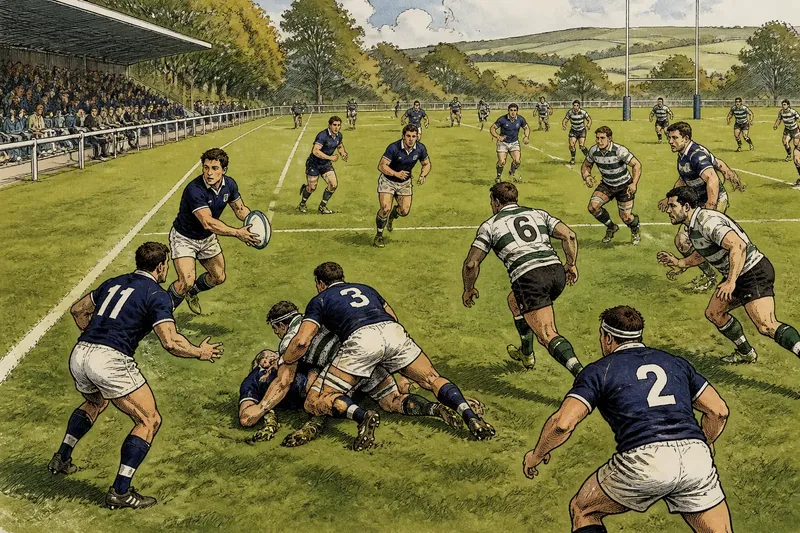
When a prop takes a short pass near the sideline, the jersey number can make the action look surprising. Rugby positions give you useful clues, but to understand the choice, watch the player’s location, the ball, and the teammates nearby.
What can a rugby position tell you?
A position points to recurring responsibilities: where a player may start, what skills the role commonly calls for, and how the player can help attack or defend. It is a helpful guide to the team’s shape, not a complete explanation of any one decision.
Forwards are often involved around close contact and contests for possession; backs often connect passes and work with open space. Those broad patterns overlap. A forward can pass into space, and a back can carry directly or support a teammate near contact. The match situation gives each player a more immediate task.
Think of the team’s shape as a map on a folding table: it shows the routes available, but players still respond to what is happening on the field.
Why does a player’s task change between phases?
A phase can leave players spread across the field. Someone may have carried the ball, helped a teammate, or moved to cover space. The next attack or defensive effort begins with that arrangement, not with everyone neatly back in a preferred spot. The ball’s location, pressure from opponents, and available support all shape who can act next.
That context explains why a player’s number alone rarely settles what they should do. A prop near the ball may be a ready support option; a wing who has moved inward may be available to receive. A teammate who might usually carry could be too far away to help in that moment.
To read the phase, look for the immediate problem the team is trying to solve: keeping possession, offering a pass, making a tackle, or covering space. Then notice which player is positioned to help.
How do teammates coordinate their responsibilities?
Teams use shared expectations to maintain a workable shape. Some players may be positioned to carry, others to pass or support, and others to cover space. A call, gesture, or teammate’s movement can signal that support is needed. These cues help players adjust without losing sight of the team’s broader plan.
Several players may have the skills to carry, pass, tackle, or support. The useful question is not only who can perform an action, but who is closest, ready, and best placed to do it while leaving teammates able to help with what follows.
What does a position name leave out?
A position name does not describe every player’s strengths, a coach’s plan, or the problem unfolding in front of the team. Two players in the same position may offer different skills. The role supplies context; the player and the phase supply the detail.
Nor does the name tell you that someone must stay in one part of the field. A back moving inward may offer a passing option; a forward moving out may be available to receive. Whether either choice works depends on the players around them and the opposition’s response.
How can you read rugby positions during a match?
Start with the number as a clue, then watch what the player does as possession and pressure change. Look for where they begin, where they move, and what option they offer. Are they close support, a passing target, a carrier, a defender, or cover behind the play?
- Observation: A player is close to the ball after a tackle. If they are ready to support, then watch whether they help secure the next phase; if not, look for the teammate who arrives first.
- Observation: A back moves toward the middle. If a teammate can pass to them, then watch whether they become an option; if pressure closes that route, watch for another support line.
- Observation: A forward moves out toward open space. If they are available to receive, then watch how the defense reacts; if a defender covers them closely, notice whether that creates room elsewhere.
- Observation: A familiar carrier is still recovering into position. If another teammate is ready, then watch whether that player takes the available action; if no one is ready, watch how the team protects possession.
- Observation: A player repeatedly appears in the same area across phases. If teammates coordinate around that movement, then consider it part of the team’s plan; if it happens only once, treat it as a response to that moment.
- Observation: A player leaves space behind the defense. If a teammate covers it, then follow how the defensive line adjusts; if no cover is visible, watch whether the team changes its alignment.
Say you are watching an invented club team attack near the touchline. An outside back is beside the ball, while a forward who often carries is still recovering into position. The ball carrier passes to the outside back, who takes the available carry. The observable decision is that the nearby player acts while the usual carrier is not yet ready; what happens next depends on the defense and the support that arrives.
What questions help explain rugby positions?
Does a jersey number define a player’s job?
No. It gives you a starting clue about familiar responsibilities. The player’s task in a phase depends on the team’s shape and who is ready nearby.
Can forwards handle the ball in open play?
Yes. A forward may carry, pass, or support when that helps the team. The position does not reserve those actions for backs.
Why might a back move into the middle?
A back may move inward to support the ball or offer a passing option. Watch the teammates and defenders around them to see what that movement makes possible.
How can you tell a recurring plan from a one-off action?
Look for a pattern across phases and for teammates coordinating around it. One unusual move may answer an immediate problem; repeated movement can reveal a broader team arrangement.
How should you use position names as a viewer?
Keep the position name in mind, then follow the phase. Ask who has the ball, where pressure is building, and which teammate can help now. That gives rugby positions their proper value: a way to read the team’s options, rather than a rulebook for every movement.
When a player acts outside the pattern you expected, check what was available to them at that moment. The player’s location and the teammates’ next movements often explain more than the jersey alone.